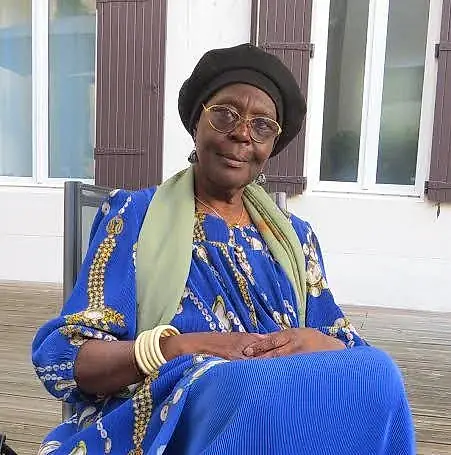
Mbissine Thérèse Diop
- Birthplace
- Dakar, Senegal
- Occupation
- Actress, Seamstress
- AKA
- Thérèse Mbissine Diop, M’Bissine Thérèse Diop
Career Stats
Career Overview
Mbissine Thérèse Diop has 1 film credits since 1966 .
- Peak: 1966
Role Distribution
Genre Breakdown
Biography
EARLY LIFE
Mbissine Thérèse Diop was born in 1949 in Dakar, Senegal, the eldest child in a family with half-siblings on both sides. Her father was Muslim and her mother Catholic; she was raised with exposure to both traditions in a way that was common and generally harmonious in Senegal at the time. Until the age of two she lived with her maternal grandfather on an island known as the Île des Coquillages (“Island of Seashells”). After his death she returned to live with her mother in Dakar. Around age 13 she spent several years in Corsica (following family circumstances related to her parents’ separation), where her hostess introduced her to the work and figure of Josephine Baker. She corresponded with Baker, who sent a signed photograph and invited her to France (an invitation Diop could not accept due to cost). Upon returning to Senegal after independence, she frequented the Cine-Club in Dakar, watching French and American films and documentaries. At about 16 she enrolled in night courses at the École des Arts de Dakar while working by day as a seamstress; she studied under French actor Robert Fontaine (who later appeared with her in Black Girl). She initially planned a career in textiles rather than acting.
CAREER
Diop did not actively pursue acting at first. A photographer from Actualités Sénégalaises took her picture; Ousmane Sembène saw it and approached her for the lead role of Diouana in Black Girl (La Noire de…, 1966). Her family strongly opposed the idea, but after meeting Sembène she accepted. She was roughly 16–17 during production. She made most of her own costumes for the film (except one polka-dot dress) and described the experience as natural and enjoyable. The film, widely regarded as the first feature-length work by a sub-Saharan African director to achieve major international recognition, follows a young Senegalese woman who becomes a domestic worker for a French family and faces isolation, racism, and despair. Diop’s performance has been widely praised for its dignity, presence, and emotional depth. She later appeared in Sembène’s Emitaï (1971) and in Black Sun (1971). In more recent years she has taken selective roles, including a community matriarch (La tante) in Cuties (2020) and an appearance in the short documentary Our Memory / Notre mémoire (2019) by Johanna Makabi. She has participated in tributes to Sembène and African cinema history, including events connected to FESPACO’s early years.
PERSONAL LIFE
Diop has generally kept her private life out of the public eye. She has lived in Paris since approximately 1977. Sources note that after Black Girl she faced social ostracism in some circles in Senegal (acting, especially for a woman at the time, carried stigma). She has continued working with textiles throughout her life and has participated in retrospectives and interviews about her pioneering role in African cinema.
Mbissine Thérèse Diop occupies a unique place in film history as one of the first Black African women to star in a feature film that gained global acclaim. Black Girl remains a cornerstone of African and postcolonial cinema, and her performance continues to be studied and celebrated. She has balanced her brief but historic screen career with a lifelong connection to textile work and has reflected in interviews on the personal cost of pioneering that role while affirming the importance of the stories told.
Filmography
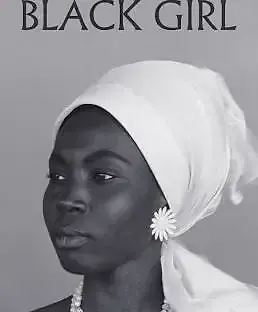
- Played the character of Diouana.
Career Timeline
By Decade
Box Office
Weekly Top Grossing- 1
 ₦5,331,351.00Week 51
 - 2
 ₦12,727,775.00Week 47
 - 3₦21,139,500.00Week 46
- 4
 ₦16,977,673.00Week 46
 - 5₦15,261,240.00Week 46
Subscribe to our Newsletter
Get the latest box office updates, trending movies, and exclusive reviews delivered straight to your inbox.
Popularity Score
Top 100% of African actors