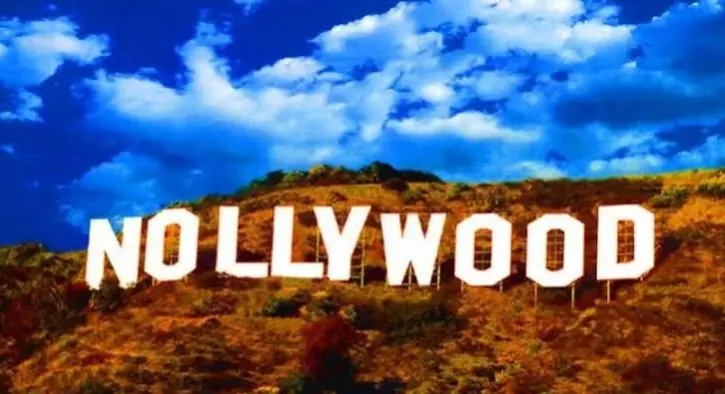
If you have ever watched a Nigerian movie filled with family drama, comedy, crime, romance, traditional customs, suspense or larger-than-life characters, chances are you have encountered Nollywood.
Nollywood is the popular name for Nigeria's film industry, one of Africa's biggest and most influential creative industries. It has grown from a largely informal video-film business into a sophisticated industry whose movies and television productions are watched by audiences in Nigeria, across Africa and around the world.
But Nollywood is much more than the English-language movies commonly associated with Nigerian cinema. It includes productions in indigenous Nigerian languages, different regional film traditions, television, cinema, streaming, direct-to-video productions and an enormous network of actors, directors, writers, producers, marketers, distributors and other creative workers. According to UNESCO, Nigeria's film industry produces thousands of films annually, making it one of the world's largest film industries by volume. The Nigerian government also describes Nollywood as the country's film industry and a major cultural and economic force.
So, what exactly does Nollywood mean, when did it begin, where is it based, what languages does it use, and how does the industry actually work?
Here is everything you need to know.
What Does Nollywood Mean?
Nollywood means Nigeria's film industry.
The name is a blend of "Nigeria" and "Hollywood," following the naming pattern used for other major film industries such as India's Bollywood. However, Nollywood is not simply "Nigeria's version of Hollywood." The two industries developed under very different circumstances.
Hollywood developed around a large studio system, cinema distribution and major commercial film companies. Nollywood, on the other hand, became famous for its fast, relatively inexpensive direct-to-video production model, particularly during the 1990s. Interestingly, the word Nollywood did not originally exist when the Nigerian video-film revolution began. Oxford Bibliographies notes that the term was coined around 2002 and was later applied retrospectively to Nigerian direct-to-video productions dating back to the late 1980s and early 1990s.
Today, however, Nollywood is widely used to describe Nigeria's film and screen industry as a whole. The term can therefore cover everything from low-budget indigenous-language productions to major cinema releases, television dramas and internationally distributed streaming films.
When Did Nollywood Start?
This question has a slightly complicated answer because Nigerian cinema existed before Nollywood. If we are talking about Nigerian filmmaking generally, the history goes back much further than the 1990s.
Filmmaking in Nigeria developed colonial period, while Nigerian filmmakers and theatre practitioners became increasingly active after independence. Filmmakers such as Hubert Ogunde, Jab Adu, Ola Balogun, Moses Olaiya and Eddie Ugboma helped establish important foundations for Nigerian cinema and popular entertainment.
The Nigerian film industry became particularly active in the 1970s, although economic and structural difficulties later affected the traditional cinema industry. The major turning point came in the late 1980s and early 1990s with the rise of home-video filmmaking.
And that is where one particular movie enters the story.
Why Living in Bondage Is So Important
When people ask, "When did Nollywood start?", the answer most commonly given is 1992. That is because of the release of Living in Bondage.
Directed by Chris Obi Rapu and produced by Kenneth Nnebue and Okechukwu Ogunjiofor, Living in Bondage was an Igbo-language film released on VHS in 1992. It became a major commercial success and is widely regarded as the movie that triggered the modern Nigerian video-film revolution. The film followed Andy Okeke, a businessman who becomes involved in a secret cult in his pursuit of wealth and power. Its combination of family drama, morality, spirituality, wealth and supernatural elements resonated strongly with Nigerian audiences.
More importantly, it demonstrated something revolutionary:
Nigerian filmmakers could produce movies relatively cheaply and sell them directly to audiences without depending entirely on traditional cinema distribution.
That changed everything.
The success of Living in Bondage encouraged many other producers to make films using similar methods. The result was an explosion of Nigerian video productions throughout the 1990s and early 2000s. WIPO describes the 1992 film as the production that helped spark the revival of Nigeria's film industry after the decline of its earlier feature-film sector. So, while 1992 did not mark the birth of Nigerian cinema, it is commonly regarded as the beginning of the modern Nollywood era.
How the Home-Video Revolution Changed Nigerian Filmmaking
The technology available at the time played a huge role.
Traditional filmmaking could be extremely expensive. Producing films on celluloid required costly equipment, film stock, processing and laboratory work. Video cameras and VHS technology offered a cheaper alternative. Instead of spending enormous amounts of money producing a film for the cinema, filmmakers could shoot a movie on video, duplicate the tapes and sell them directly to consumers.
This created a new production model. The industry became closely connected to Nigeria's informal commercial economy. Producers, marketers and distributors worked together to finance, produce and sell movies. Markets such as Alaba International Market in Lagos and Idumota became important parts of the distribution ecosystem. Other cities, particularly in southeastern Nigeria, also became significant centres of production, marketing and distribution.
This model allowed filmmakers to respond quickly to what audiences wanted. A successful story could be followed by several similar productions. Popular actors could attract buyers. Producers could make films relatively quickly and move them into the market without waiting for a long theatrical release cycle.
That speed became one of Nollywood's defining characteristics.
How Does Nollywood Work Today?
Modern Nollywood is much more diverse than the VHS industry of the 1990s. Today, a Nigerian movie can be financed through several different routes.
A production may be funded by:
- Independent producers
- Production companies
- Private investors
- Television networks
- Streaming platforms
- Cinema distributors
- Brand partnerships
- International investors
- Co-production arrangements
The production process generally begins with an idea or screenplay. A producer assembles a team, secures financing, hires the director and cast, scouts locations and organizes the production schedule. Unlike the old video era, modern productions can have significantly larger budgets, professional cinematography, elaborate sets and extensive post-production.
However, the industry still contains productions made on very different budget levels. That diversity is one reason it is difficult to describe Nollywood as having one single production model.
Some films are made quickly and relatively cheaply for television or streaming audiences, while others are designed as major theatrical releases.
The Fast Production Culture
Speed remains an important part of Nollywood's identity. During the industry's early video era, productions could be completed remarkably quickly compared with conventional international filmmaking. WIPO previously described average production periods of less than two months for some Nigerian video films, illustrating how the industry developed around speed, limited resources and direct access to the market.
The modern industry has become more professional, but the ability to produce stories efficiently remains important. Nigeria has a huge domestic audience, and filmmakers can potentially recover investments through several channels rather than relying exclusively on international theatrical distribution.
Is Nollywood Only English Language?
No.
This is one of the biggest misconceptions about Nollywood. Nollywood is not limited to English. Nigeria is one of the world's most linguistically diverse countries, and Nigerian filmmakers have produced movies in many different languages.
These include:
- English
- Nigerian Pidgin
- Yoruba
- Igbo
- Hausa
- Edo
- Ibibio
- Efik
- Tiv
- Idoma
- Igala
- Nupe
- Esan
- Ijaw
- and other Nigerian languages
Oxford Academic notes that Nollywood has no official language and identifies productions in English, Pidgin, Yoruba, Igbo and several other languages.
Living in Bondage, for example, was primarily an Igbo-language film, demonstrating from the beginning of the modern video era that Nigerian audiences were willing to embrace films in indigenous languages. Yoruba-language cinema also has deep roots in Nigeria's travelling theatre tradition. The Hausa-language film industry centred around northern Nigeria is commonly known as Kannywood, with Kano serving as a particularly important centre.
So when people say "Nollywood," they are talking about a broad Nigerian screen industry rather than a single language or style.
Where Is Nollywood Based?
There is no single building or location called "Nollywood." The industry is spread across Nigeria. However, Lagos is widely regarded as its main commercial and production centre, particularly for mainstream English-language Nigerian cinema. Lagos has a large concentration of production companies, actors, directors, producers, marketers, media organizations and other entertainment businesses.
But Nollywood extends far beyond Lagos.
Lagos
Lagos is arguably the industry's most internationally visible centre. It is home to many production companies, studios, entertainment businesses, cinemas and major industry events. The city's enormous population also provides a huge domestic audience.
Asaba
Asaba, in Delta State, has become another major Nigerian filmmaking hub. Its location, available production infrastructure and comparatively accessible filming environment have made it popular with producers.
Enugu
Enugu has a particularly important place in the history of Igbo-language filmmaking and Nigerian cinema. The city has also been associated with television production and some of the country's earliest modern film activities.
Onitsha and Aba
Onitsha and Aba have historically played important commercial roles in the Nigerian video-film economy. Onitsha was particularly significant to the early development of the video-film business because of its strong trading culture.
Kano
Kano is central to Kannywood, Nigeria's Hausa-language film industry.
Although Kannywood is often discussed separately from the southern Nigerian Nollywood tradition, it is still an important part of Nigeria's wider film ecosystem.
In other words, asking "Where is Nollywood based?" is a little like asking where Nigeria's music industry is based.
There are major centres, but the creative industry itself is distributed across the country.
How Are Nollywood Movies Distributed?
Distribution is one of the areas where Nollywood has changed the most. During the early video era, movies were commonly distributed through physical VHS tapes and later VCDs and DVDs. Marketers played an extremely important role.
A film could be produced and then handed over to distributors who would reproduce and sell copies through markets and retail networks. This helped Nollywood reach audiences who might not have had easy access to cinemas. The model also contributed to the industry's rapid growth. But piracy became a major problem. Unauthorized copying meant that filmmakers could lose significant amounts of potential revenue after spending money producing a film.
As technology changed, Nollywood's distribution system changed with it.
From VHS to Streaming
Today, Nigerian films can reach audiences through:
- Cinemas
- Television
- DVDs
- YouTube
- Streaming platforms
- Video-on-demand services
- Digital rental and purchase platforms
- International television networks
The rise of streaming has been particularly important.
Platforms such as Netflix and other international and African-focused services have made Nigerian films and series accessible to audiences far beyond Nigeria. This has changed what it means for a Nollywood movie to be successful. In the past, success could mean selling thousands of physical copies. Today, a film can become successful because it performs strongly in Nigerian cinemas, attracts large streaming audiences, trends online or reaches international viewers.
UNESCO identifies digital technology and online platforms as major forces behind the continuing expansion of African film industries, including Nollywood.
Why Nollywood Matters to Nigeria
Nollywood is not simply entertainment. It is also an important part of Nigeria's economy and cultural identity. The industry creates employment for actors, directors, writers, editors, cinematographers, costume designers, makeup artists, sound engineers, production assistants, marketers and many other professionals. The economic impact extends beyond people whose names appear in movie credits. Transport workers, caterers, photographers, accommodation providers, equipment suppliers, fashion designers and other businesses can benefit from film production.
Nigeria's government identifies the film industry as a significant cultural and economic force, while UNESCO has highlighted its enormous production scale. The U.S. International Trade Administration reported that Nigeria's broader media and entertainment sector, including film and music, contributed approximately ₦1.97 trillion to the country's GDP in 2023.
Nollywood as a Cultural Export
Perhaps Nollywood's greatest influence is cultural. Nigerian movies allow audiences around the world to see Nigerian environments, clothing, languages, family structures, traditions, humour, social issues and everyday life. For many international viewers, Nollywood provides an introduction to Nigerian culture that they might not otherwise encounter. And Nigerian audiences living abroad can use these movies as a connection to home.
This is especially significant for Nigerians and other Africans in the diaspora. A film made in Lagos, Enugu or Asaba can now be watched by someone in London, Toronto, New York, Johannesburg or Accra almost immediately. That represents a dramatic change from the early VHS era.
Why Nollywood Became So Popular Across Africa
Nollywood's popularity is not limited to Nigeria. Nigerian films became widely circulated throughout Africa because their stories often deal with experiences that audiences across the continent recognize. Family conflicts, marriage, friendship, wealth, poverty, religion, traditional beliefs, corruption, ambition, betrayal and social pressure are not uniquely Nigerian subjects.
The Nigerian setting may be specific, but the emotions can be universal. The industry's accessibility also helped. Because Nollywood films could be produced and distributed relatively cheaply, they became available to audiences who did not necessarily have access to expensive international cinema.
Nigerian actors also became recognizable stars across Africa. This created a form of African celebrity culture that crossed national borders.
Nollywood's Influence on Global Cinema
Nollywood has also challenged traditional ideas about how a successful film industry must operate. The industry demonstrated that filmmakers could build a large commercial screen business without beginning with Hollywood-style budgets, enormous studios or extensive cinema infrastructure.
Its original model relied on something much simpler:
make stories people want to watch, produce them affordably and get them directly to the audience.
That basic principle helped create one of the world's most prolific film industries. The industry has since evolved considerably. Modern Nollywood productions increasingly use sophisticated cameras, visual effects, professional sound design, high-end cinematography and international distribution. Some Nigerian filmmakers now work with international studios and streaming companies, while Nigerian actors appear in international productions.
This has helped blur the boundary between "Nollywood" and the wider global entertainment industry.
How Big Is Nollywood?
The exact number of films produced each year varies depending on the definition and data source, but Nigeria consistently ranks among the world's most prolific film-producing countries.
UNESCO reported around 2,500 Nigerian films per year, while data from Nigeria's National Bureau of Statistics cited by UNESCO recorded 2,599 films in 2020. UNESCO noted that this placed Nigeria second globally by output at the time, behind India's film industry and ahead of Hollywood in terms of sheer number of productions.
But quantity is only one way to measure Nollywood. Its cultural reach is arguably even more important. A film does not have to dominate the international box office to influence millions of people. A Nigerian film can become popular through television, streaming, social media, YouTube or word of mouth. That flexibility has always been one of Nollywood's greatest strengths.
The Challenges Facing Nollywood
Despite its success, Nollywood still faces serious challenges.
Piracy
Piracy has historically been one of the industry's biggest problems. Unauthorized copies can reduce the money available to producers and investors.
Financing
Not every filmmaker has access to the capital required to produce high-quality films. This can affect production quality and limit the ability of independent filmmakers to tell ambitious stories.
Infrastructure
Filmmakers can face challenges involving electricity, roads, locations, equipment, studios, cinemas and other production infrastructure.
Distribution
Although streaming has created new opportunities, competition for audiences is intense. Nigerian filmmakers are now competing not only with other Nigerian productions but also with American, British, Korean, Indian and other international content.
Professional development
As the industry becomes more sophisticated, there is growing demand for specialized skills in areas such as cinematography, screenwriting, visual effects, sound design, production management and post-production.
These challenges do not mean Nollywood is failing.
Quite the opposite. They show how an industry that began as an informal video economy is now dealing with the demands of a much larger global entertainment market.
The Future of Nollywood
The future of Nollywood is increasingly digital. Streaming has changed how movies are financed, marketed and consumed. Social media has also made it easier for actors and filmmakers to build audiences directly.
A filmmaker no longer necessarily needs to depend entirely on traditional television or physical distribution to find viewers. At the same time, Nigerian cinema continues to grow. Local films have become increasingly important at Nigerian box offices, while international streaming platforms continue to invest in Nigerian stories.
This creates an interesting balance. Nollywood must remain Nigerian enough to retain the cultural identity that made it distinctive while also producing stories that can compete in an increasingly international market.
That balance will likely define the industry's next chapter.
Frequently Asked Questions About Nollywood
What does Nollywood mean?
Nollywood is the popular name for Nigeria's film industry. The word combines "Nigeria" and "Hollywood."
When did Nollywood start?
Nigerian cinema existed decades before Nollywood. However, 1992 is commonly regarded as the beginning of modern Nollywood because of the huge impact of Living in Bondage, an Igbo-language home-video film that helped trigger the Nigerian video-film boom.
Is Nollywood only English language?
No. Nollywood includes films made in English, Nigerian Pidgin and several indigenous Nigerian languages, including Yoruba, Igbo and others.
Where is Nollywood based?
Lagos is the industry's major commercial centre, but Nollywood is not located in one city. Important production and commercial centres include Lagos, Asaba, Enugu, Onitsha, Aba and other Nigerian cities. Kano is a major centre of the separate but related Hausa-language Kannywood industry.
Why is Living in Bondage important?
Living in Bondage, released in 1992, demonstrated the commercial potential of Nigerian home-video filmmaking. Its success helped establish the production and distribution model that drove the explosive growth of modern Nollywood.
Is Nollywood the second-largest film industry in the world?
That depends on how "largest" is measured. By number of films produced, Nigeria has ranked among the world's top film industries, with UNESCO reporting around 2,500 films annually and describing Nigeria as second globally by output in its cited data.
Why is Nollywood important globally?
Nollywood gives Nigerian and African filmmakers a powerful platform for telling local stories to international audiences. It also contributes to employment, cultural exchange, tourism, entertainment and Nigeria's wider creative economy.
Final Thoughts
Nollywood is one of the most remarkable stories in modern African entertainment. It did not begin as a giant studio system. It grew from television, theatre, informal markets, affordable video technology and entrepreneurs who discovered that Nigerian audiences wanted to see their own stories on screen.
Living in Bondage became the defining turning point of that transformation in 1992, but the foundations of Nigerian cinema were laid decades earlier. Since then, Nollywood has moved from VHS tapes to DVDs, television, cinemas and global streaming platforms.
It has also moved from being viewed primarily as a Nigerian phenomenon to becoming a recognizable part of global popular culture. Most importantly, Nollywood proves that there is enormous value in telling stories from home.
Whether a film is made in English, Igbo, Yoruba, Hausa, Pidgin or another Nigerian language, whether it is shot in Lagos, Enugu, Asaba or another part of the country, and whether audiences watch it in a cinema, on television or on a phone, it contributes to the continuing story of Nigerian cinema.
That is Nollywood: not just a name for Nigerian movies, but a vast creative ecosystem built around Nigerian stories, talent, business and culture.