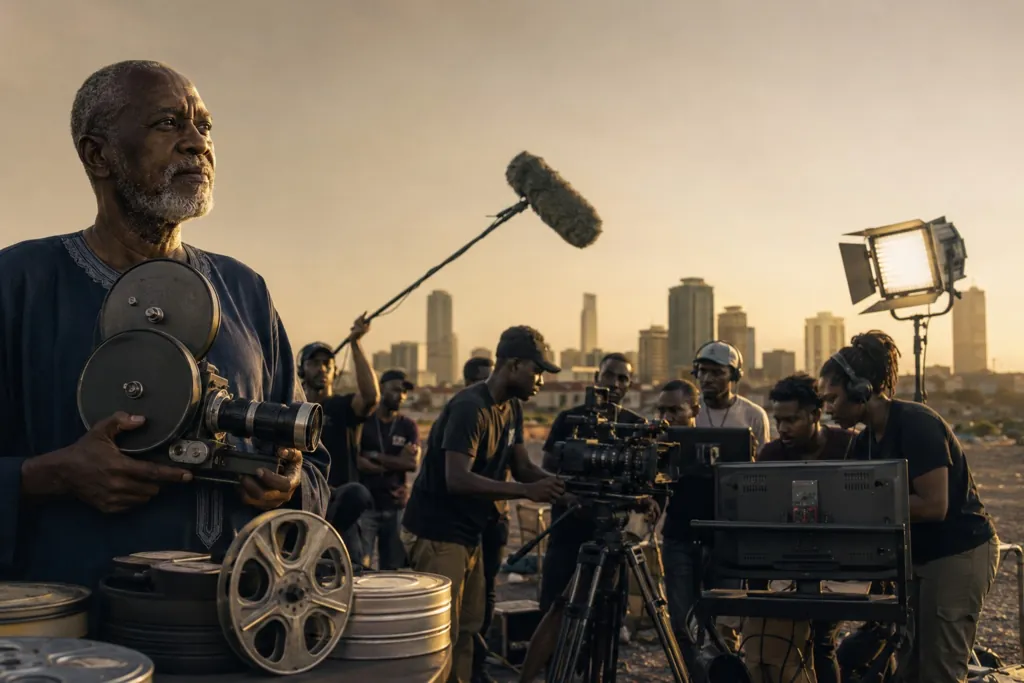
How African Movies Have Evolved: From Celluloid to Global Streaming
African cinema has come a long way.
Today, audiences around the world can stream African films with a few taps on their phones or watch award-winning productions in cinemas from Lagos to London. But the journey to this point wasn't quick or easy. It was shaped by decades of creativity, determination, technological change, and filmmakers who refused to let African stories go untold.
The evolution of African cinema is more than a story about better cameras or bigger budgets. It's about reclaiming narratives, preserving cultures, creating opportunities, and connecting African voices with audiences across the globe.
In this guide, we'll explore how African movies have evolved—from the days of celluloid film reels to today's streaming platforms—and how each era helped shape the vibrant industry we know today.
The Birth of African Cinema
Cinema arrived in Africa in the late 19th and early 20th centuries, not long after motion pictures were introduced in Europe and North America. At first, films shown across the continent were almost entirely produced by foreign companies and colonial administrations.
These early productions rarely reflected the everyday lives, traditions, or perspectives of African people. Instead, Africa was often portrayed through an outsider's lens, with stories designed for colonial audiences rather than local communities.
As filmmaking slowly expanded, a new generation of African storytellers began asking an important question:
"Why should someone else tell our stories for us?"
That question would eventually become the foundation of modern African cinema.
A New Era After Independence
The wave of independence that swept across Africa during the 1950s, 1960s, and 1970s transformed more than politics—it also changed filmmaking.
As countries gained independence, filmmakers began creating stories that reflected their own histories, cultures, languages, and social realities. Instead of repeating colonial narratives, they explored identity, tradition, family, freedom, and the hopes and struggles of newly independent nations.
This period marked the birth of many national film industries across the continent. Governments, cultural institutions, and independent filmmakers all played a role in building local cinema, laying the foundation for future generations.
For the first time, African audiences increasingly saw themselves represented on screen by people who understood their experiences.
The Challenges of Filmmaking on Celluloid
Making movies wasn't always as accessible as it is today.
For much of the twentieth century, filmmakers relied on expensive 16mm and 35mm film. Every minute of footage had to be purchased, carefully stored, developed in specialized laboratories, and edited by hand. Mistakes were costly, and reshooting scenes often meant spending money that many productions simply didn't have.
Equipment was difficult to import, trained technicians were few, and many countries had limited cinema infrastructure. Distribution was another challenge, with films often reaching only a small audience.
Despite these obstacles, filmmakers continued to create meaningful work, proving that compelling stories don't depend solely on expensive technology.
The Home Video Revolution Changed Everything
If there is one moment that completely changed African filmmaking, it was the arrival of affordable video technology.
During the 1990s, digital video cameras, VHS tapes, and later DVDs dramatically reduced the cost of producing and distributing films. Instead of relying on expensive film stock, creators could shoot digitally and release movies directly to consumers.
No country embraced this opportunity more than Nigeria.
The rise of Nollywood demonstrated that filmmakers could produce compelling stories quickly, distribute them widely, and build a sustainable industry outside the traditional Hollywood model. What began as a practical solution to financial challenges soon became one of the world's most prolific film industries.
The success of Nigeria also inspired filmmakers across Ghana, Uganda, Kenya, Tanzania, and many other African countries to invest in local storytelling.
Digital Filmmaking Raised the Bar
As digital technology continued to improve during the 2000s and 2010s, African cinema entered another period of rapid growth.
Modern digital cameras delivered sharper images, editing software became more affordable, and visual effects that were once out of reach became increasingly accessible.
Production quality improved significantly.
Directors experimented with new storytelling techniques. Cinematographers captured breathtaking landscapes with drones. Editors could complete projects on laptops rather than expensive studio equipment.
Perhaps most importantly, digital filmmaking lowered the barrier to entry. Independent filmmakers no longer needed massive budgets to produce professional-looking films.
Talent, creativity, and determination became just as valuable as expensive equipment.
Streaming Opened African Stories to the World
The biggest change in recent years hasn't been the camera—it's been the audience.
Streaming platforms have transformed how African films are discovered and enjoyed. A movie produced in Nairobi, Lagos, Cairo, or Johannesburg can now reach viewers in Europe, Asia, North America, and beyond within days of its release.
This global accessibility has created new opportunities for filmmakers, actors, producers, and writers.
International audiences have become more interested in authentic African stories, while global distributors increasingly recognize the continent as an important source of creative talent.
For viewers, this means discovering films that were once difficult to find. For filmmakers, it means reaching audiences that previous generations could only imagine.
Storytelling Has Evolved Alongside Technology
Technology has certainly improved filmmaking, but the stories themselves have evolved too.
Earlier African films often focused heavily on independence, cultural identity, tradition, and social change. These themes remain important today, but modern filmmakers are exploring an even wider range of subjects.
Contemporary African cinema includes romantic comedies, psychological thrillers, science fiction, fantasy, historical epics, crime dramas, documentaries, and animation.
Characters have become more layered, production values continue to rise, and collaborations between filmmakers from different countries are becoming increasingly common.
Despite these changes, one thing has remained remarkably consistent: African cinema continues to tell stories that are deeply rooted in people, family, community, and culture.
African Cinema on the Global Stage
African films are no longer viewed as niche productions.
Today, filmmakers from across the continent regularly showcase their work at major international film festivals, where they receive critical acclaim and connect with audiences from around the world.
Many African productions have earned prestigious awards and nominations, demonstrating that stories from the continent resonate far beyond national borders.
This growing recognition has encouraged investment, strengthened collaborations, and inspired a new generation of filmmakers who see global success as an achievable goal rather than a distant dream.
Challenges That Still Remain
While African cinema has made remarkable progress, challenges continue to shape the industry.
Many filmmakers still struggle to secure funding, protect their work from piracy, or access reliable distribution channels. In some regions, cinema infrastructure remains limited, making it difficult for audiences to experience locally produced films on the big screen.
There is also an ongoing need to preserve classic African films. Many older productions exist only on aging film reels or deteriorating video formats, making restoration and archiving increasingly important.
Addressing these challenges will help ensure that Africa's cinematic heritage is protected for future generations.
Looking Ahead: The Future of African Cinema
The future of African cinema looks brighter than ever.
Affordable filmmaking tools, improved internet access, mobile technology, and advances in artificial intelligence are creating opportunities that previous generations could only dream of.
Young filmmakers are telling stories from fresh perspectives, while audiences around the world are increasingly seeking authentic voices and diverse narratives.
As technology continues to evolve, the heart of African cinema is unlikely to change.
Its greatest strength has never been the cameras, the budgets, or the platforms. It has always been the stories—and the people who tell them.
A Timeline of African Cinema's Evolution
- Early 1900s: Motion pictures arrive across parts of Africa.
- 1950s–1970s: Independence movements inspire local storytelling and national cinemas.
- 1980s: More countries begin developing their own film industries.
- 1990s: The home video revolution dramatically expands filmmaking, particularly in Nigeria.
- 2000s: Digital cameras and computer editing become increasingly accessible.
- 2010s: African films gain greater international recognition and wider distribution.
- 2020s: Streaming platforms connect African cinema with global audiences.
- The Future: New technologies continue to expand opportunities for African storytellers.
Final Thoughts
The story of African cinema is one of resilience, innovation, and imagination.
From the early days of costly film reels to today's digital productions streamed around the world, African filmmakers have continually found new ways to share stories that matter. Each technological shift has opened new doors, but the true driving force behind African cinema has always been its storytellers.
Whether you're just beginning to explore African films or you've been a fan for years, there's never been a better time to discover the incredible diversity of movies being created across the continent.
Explore AfricanMovieDB to discover films by country, genre, actor, director, and release year—and experience the remarkable journey of African cinema for yourself.