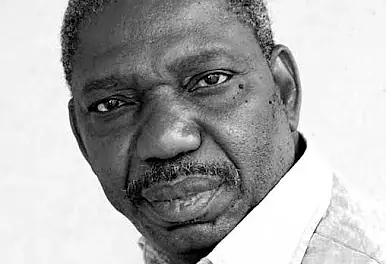
Idrissa Ouédraogo
- Born
- 1954-01-21 (age 64)
- Died
- 2018-02-18 (aged 64) · 8 years ago
- Birthplace
- Banfora, Upper Volta
- Occupation
- Film Director, Screenwriter, Producer
- AKA
- Idrissa Ouedraogo
Career Stats
Career Overview
Idrissa Ouédraogo has 2 film credits spanning 1989–1990 .
- Peak: 1990
Role Distribution
Genre Breakdown
Biography
EARLY LIFE
Idrissa Ouédraogo was born on 21 January 1954 in Banfora, in the southwest of what was then Upper Volta (now Burkina Faso). He grew up in the northern town of Ouahigouya. His parents were farmers and sent him to Ouagadougou for better educational opportunities. He obtained a Bachelor of Arts degree in 1976. He then trained at the African Institute for Cinema Studies (Institut Africain d’Études Cinématographiques / IAFEC) in Ouagadougou, completing a master’s degree in 1981 as a top student of his class. He continued his training with studies in Kiev in the Soviet Union, then moved to Paris, where he graduated from the prestigious Institut des hautes études cinématographiques (IDHEC, later La Fémis) in 1985 and earned a DEA (advanced research diploma) from the Sorbonne.
CAREER
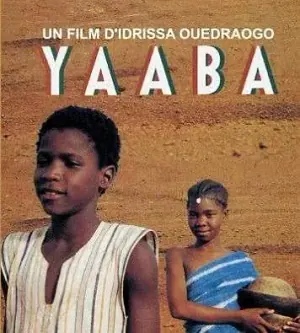
After graduating from IAFEC in 1981, Ouédraogo founded his own production company, initially called “The Future of Films” (Les Films de l’Avenir), which later became Les Films de la Plaine. He also worked briefly for the Burkina Faso Directorate of Cinema Production. His early short films established his reputation: Pourquoi? (1981), Poko (1981, short-film prize at FESPACO), Les Écuelles (The Platters, 1983), Les Funérailles du Larle Naba (1984), Ouagadougou, Ouaga deux roues (1985), Issa le tisserand (Issa the Weaver, 1985), and Tenga (1985). These works often explored social issues such as rural poverty, lack of infrastructure, and the tension between tradition and change, frequently using strong visual storytelling with limited dialogue. His first feature, Yam Daabo (The Choice, 1986/1987), examined a rural family’s decision between remaining dependent on aid or seeking self-sufficiency. International breakthrough came with Yaaba (Grandmother, 1989), a poignant story of friendship between a young boy and an elderly woman ostracized as a witch; it won the FIPRESCI Prize at Cannes and other awards. His most celebrated film, Tilaï (The Law / A Question of Honour, 1990), won the Grand Prix at the 1990 Cannes Film Festival and the Étalon de Yennenga at FESPACO in 1991. It explores the clash between tradition and individual desire in a changing society. Samba Traoré (1993) earned a Silver Bear nomination (and recognition) at the Berlin International Film Festival and further examined rural-urban tensions and moral consequences. Later features include Karim and Sala (1991), Le Cri du cœur (The Heart’s Cry, 1994), Kini and Adams (1997, competed at Cannes), La Colère des dieux (Anger of the Gods, 2003), and Kato Kato (2006). He also directed television series such as Kadi Jolie (2001) and Entre l’arbre et l’écorce (1999), as well as segments for anthology projects including Lumière and Company (1995) and 11’09”01 September 11 (2002). Ouédraogo’s cinema is noted for its elegant visual style, focus on everyday African life (particularly rural communities), and exploration of the conflicts between tradition and modernity, rural and urban existence. While some critics argued his later work sometimes catered to international tastes, others praised his skill in making films under difficult conditions while remaining rooted in African realities. In his final years he advocated for stronger local production and distribution systems.
PERSONAL LIFE
Idrissa Ouédraogo remained closely tied to Burkina Faso throughout his career and was deeply engaged with the challenges facing African cinema, including funding shortages, limited local markets, and the need for greater professionalism and infrastructure. In his later years he expressed disappointment with aspects of contemporary African filmmaking due to a perceived lack of talent and production resources. He died on 18 February 2018 at a clinic in Ouagadougou from an unspecified illness. He received a military funeral, with the procession stopping at key cultural sites including the Monument of African Filmmakers and the gates of FESPACO. Burkinabé President Roch Marc Christian Kaboré described the country as having “lost a filmmaker of immense talent.”
Ouédraogo is remembered as a key figure of African cinema’s “second generation,” bridging the pioneering work of directors like Ousmane Sembène with later developments. His films continue to be screened and studied for their humanism, formal beauty, and cultural insight. He was named a Chevalier of the Ordre des Arts et des Lettres.
Filmography
Career Timeline
By Decade
Box Office
Weekly Top Grossing- 1
 ₦5,331,351.00Week 51
 - 2
 ₦12,727,775.00Week 47
 - 3₦21,139,500.00Week 46
- 4
 ₦16,977,673.00Week 46
 - 5₦15,261,240.00Week 46
Subscribe to our Newsletter
Get the latest box office updates, trending movies, and exclusive reviews delivered straight to your inbox.
Popularity Score
Top 100% of African actors