
Youssef Chahine
- Born
- 1926-01-25 (age 82)
- Died
- 2008-07-27 (aged 82) · 18 years ago
- Birthplace
- Alexandria, Kingdom of Egypt
- Occupation
- Film Director, Screenwriter, Actor, Producer
- Alma Mater
- Collège Saint Marc and Victoria College; Pasadena Playhouse, California
- AKA
- Youssef Gabriel Chahine, Yusuf Shahin
Career Stats
Career Overview
Youssef Chahine has 1 film credits since 1958 .
- Peak: 1958
Role Distribution
Genre Breakdown
Biography
EARLY LIFE
Youssef Gabriel Chahine was born on 25 January 1926 in Alexandria, Egypt, into a Melkite Greek Catholic family. His father was a Lebanese attorney originally from Zahle who supported the Egyptian nationalist Wafd Party; his mother, Claire Bastorous, was of Greek descent and worked as a tailor. The household was cosmopolitan and multilingual (speaking several languages, common in Alexandria at the time). Chahine developed an early passion for cinema. As a child he bought a small projector and screened films for neighbourhood children. He attended the Frères’ school (Collège Saint Marc) and later the elite Victoria College in Alexandria, graduating in 1944. After a brief period at the University of Alexandria (engineering), he persuaded his parents to allow him to study in the United States. He enrolled at the Pasadena Playhouse in California, where he studied theatre and dramatic arts and ranked first among the small group of students who completed the programme.
CAREER
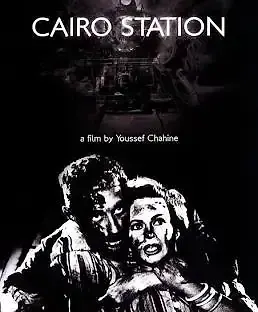
After returning to Egypt, Chahine worked briefly in the publicity department of 20th Century Fox before turning to directing. Cinematographer Alvise Orfanelli helped him enter the industry. He made his feature debut with Baba Amin (Daddy Amin, 1950) at age 23. His second film, Son of the Nile (1951), brought him to the Cannes Film Festival. He quickly became a major force in Egyptian cinema. Struggle in the Valley (The Blazing Sun, 1954) launched the career of Omar Sharif. Cairo Station (1958) is widely regarded as a landmark of Egyptian realism. Other significant early and mid-career works include Jamila, the Algerian (1958), Saladin the Victorious (1963), The Land (1969, Golden Tanit at Carthage), and The Sparrow (1972), an Egypt–Algeria co-production that addressed the aftermath of the 1967 war. From the late 1970s he created a celebrated autobiographical cycle: Alexandria… Why? (1978, Silver Bear – Special Jury Prize at Berlin), An Egyptian Story (1982), Alexandria Again and Forever (1990), and Alexandria… New York (2004). These films blend personal memory, political history, and formal experimentation. Later works include Adieu Bonaparte (1985), The Sixth Day (1986, starring Dalida), The Emigrant (1994, inspired by the biblical Joseph and the subject of controversy with religious conservatives), and Destiny (1997), a historical drama about the philosopher Averroes that defended intellectual freedom against fundamentalism. In 1997 Cannes awarded him the 50th Anniversary Lifetime Achievement Award. He also contributed a segment to the omnibus film 11'09''01 – September 11 (2002). Chahine directed more than 40 features and remained active until shortly before his death. Twelve of his films appear on the Cairo International Film Festival’s list of the Top 100 Egyptian films.
PERSONAL LIFE
Chahine maintained a strong connection to his Alexandrian roots and family background throughout his life and work. He was raised Catholic but later described himself simply as “Egyptian” when asked about religion, rejecting organized religion in favour of a broader cultural identity. His autobiographical films explore personal themes including family relationships, sexuality, identity, and the experience of growing up in a multicultural port city. He had a niece, Marianne Khoury, who became a film producer and collaborator.
Youssef Chahine is celebrated as a cosmopolitan, politically engaged, and formally inventive filmmaker who combined popular Egyptian cinema traditions with personal and social critique. His work frequently explored nationalism, identity, tolerance, sexuality, and resistance to both authoritarianism and religious extremism. He faced censorship and controversy throughout his career yet maintained an international presence at major festivals. He died in Cairo on 27 July 2008 following a brain haemorrhage. His films continue to be screened and studied worldwide as landmarks of Arab and world cinema.
Filmography
Key Collaborations
Frequent Co-Stars




Career Timeline
By Decade
Box Office Trend
Sep 11 – Sep 17, 2026- 1
 One Gidi NightNew this week₦17,523,920.0075 cinemas
 - 2
 ₦15,948,949.0037 cinemas
 - 3
 ₦11,144,825.0052 cinemas
 - 4
 ₦10,840,075.0037 cinemas
Subscribe to our Newsletter
Get the latest box office updates, trending movies, and exclusive reviews delivered straight to your inbox.
Popularity Score
Top 100% of African actors