Philippe Lacôte
- Birthplace
- Abidjan, Côte d’Ivoire
- Occupation
- Film Director, Screenwriter, Producer
- Alma Mater
- Université Toulouse II-Le Mirail
- AKA
- Philippe Lacote
Career Stats
Career Overview
Philippe Lacôte has 1 film credits since 2020 .
- Peak: 2020
Role Distribution
Genre Breakdown
Biography
EARLY LIFE
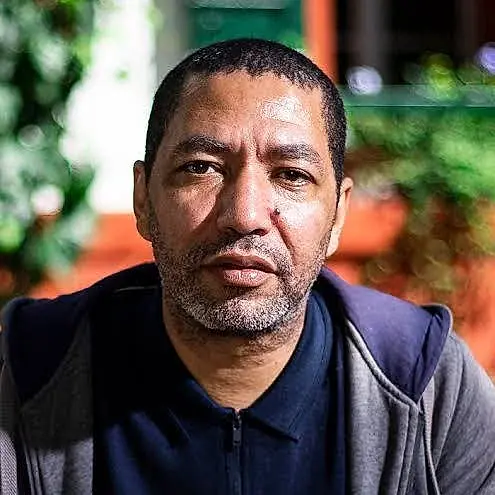
Philippe Lacôte was born in 1969 in Abidjan, the economic capital of Côte d’Ivoire, to an Ivorian mother and a French father. He grew up in the Marcory neighborhood, in a house adjacent to the Magic cinema (Le Magic). His mother frequently left him at the theater while running errands, so the cinema became a second home. He watched fragmented screenings of martial-arts films, Indian cinema, and other popular movies, inventing his own narratives from the incomplete stories. His mother was a political activist and co-founder of the Front populaire ivoirien (FPI), the first major opposition party under Félix Houphouët-Boigny. She was imprisoned for political reasons at the Maison d’arrêt et de correction d’Abidjan (MACA). As a child, Lacôte regularly visited her there by collective taxi—an experience that left a lasting imprint and later informed his cinema, particularly Night of the Kings. He attended the Lycée classique d’Abidjan before moving to France for higher education.
CAREER
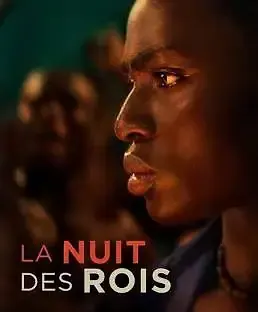
After studying linguistics in Toulouse, Lacôte began his professional life in radio. From 1989 to 1992 he worked as a reporter and chronicler at Radio FMR, producing sound portraits (including on the fall of the Berlin Wall). He later assisted radio director Maurice Audran at Radio France and co-directed a radio fiction. He entered cinema through practical roles: projectionist and assistant programmer at the art-house cinema Le Cratère in Toulouse. His first short film, Somnambule (1994/1995), was shot in 16 mm black-and-white. Subsequent shorts include Affaire Libinski (2001, co-directed), Cairo Hours (2002), Le Passeur / The Messenger (2006/2007, featuring Denis Lavant), and To Repel Ghosts (2013). In 2002, during the outbreak of the Ivorian civil conflict, he returned to Abidjan and filmed in his neighborhood of Wassakara (Yopougon). This work became the hybrid documentary Chroniques de guerre en Côte d’Ivoire (2008). After the crisis he co-founded Wassakara Productions with a collective of artists to create independent voices outside mainstream media. He has also been involved with the Paris-based structure ATRIA / Atriascope, supporting African and Southern filmmakers. His feature debut, Run (2014), premiered in the Un Certain Regard section at Cannes. It tells the story of a young man on the run after assassinating a political figure, weaving personal memory with the country’s turbulent recent history. The film was Côte d’Ivoire’s submission for the Best International Feature Film Oscar and earned a Lumière Award nomination. His second feature, Night of the Kings (La Nuit des rois, 2020), is set inside the MACA prison during a red-moon night when a new inmate must tell a story until dawn to survive—a modern Scheherazade tale infused with griot traditions and political allegory. It premiered in the Orizzonti section at Venice, won the Amplify Voices Award at TIFF, received the Youth Jury Award at Rotterdam, and was Côte d’Ivoire’s Oscar submission. In 2018 he directed episodes of the Arte documentary series Slavery Routes (Les Routes de l’esclavage). In 2024 he directed the English-language thriller Killer Heat (based on a Jo Nesbø story), starring Joseph Gordon-Levitt, Shailene Woodley, and Richard Madden, produced by Amazon Studios. His next project, 7 Gold Thieves, explores family narrative across generations between West Africa and Harlem’s African diaspora and Sufi communities; he developed research for it during a 2024 Villa Albertine residency in New York. Lacôte is also a producer (Wassakara Productions in Abidjan and Banshee Films in Paris) and has served on international juries, including the International Competition at the 2021 Locarno Film Festival.
PERSONAL LIFE
Lacôte maintains a relatively private personal life. He divides his time between Abidjan and Paris and has spoken of the lasting influence of his mother’s political engagement and his childhood proximity to both cinema and the prison world.
Lacôte’s cinema is characterized by a blend of documentary impulse and fictional storytelling, a strong interest in oral tradition and the power of narrative, and a personal yet political engagement with Côte d’Ivoire’s history. He has spoken of cinema as a way to reclaim and reframe collective and family stories. He remains one of the most prominent contemporary voices in Ivorian and Francophone African cinema.
Filmography
Career Timeline
By Decade
Box Office Trend
Sep 11 – Sep 17, 2026- 1
 One Gidi NightNew this week₦17,523,920.0075 cinemas
 - 2
 ₦15,948,949.0037 cinemas
 - 3
 ₦11,144,825.0052 cinemas
 - 4
 ₦10,840,075.0037 cinemas
Subscribe to our Newsletter
Get the latest box office updates, trending movies, and exclusive reviews delivered straight to your inbox.
Popularity Score
Top 100% of African actors