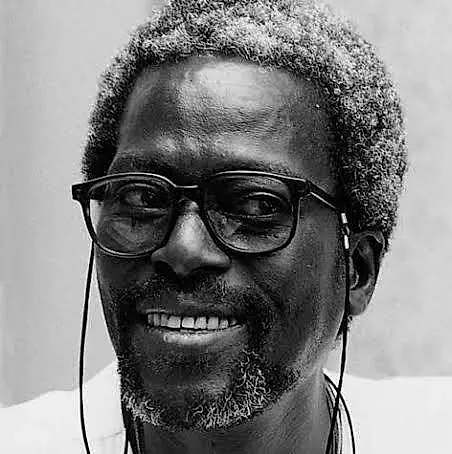
Djibril Diop Mambéty
- Born
- 1945-01-23 (age 53)
- Died
- 1998-07-23 (aged 53) · 28 years ago
- Birthplace
- Colobane, Senegal
- Occupation
- Film Director, Screenwriter, Actor, Orator, Composer, Poet
- AKA
- D.D.M.
Career Stats
Career Overview
Djibril Diop Mambéty has 1 film credits since 1973 .
- Peak: 1973
Role Distribution
Genre Breakdown
Biography
EARLY LIFE
Djibril Diop Mambéty was born on 23 January 1945 in Colobane, a working-class neighborhood on the outskirts of Dakar, Senegal. He was the son of a Muslim cleric (imam) and belonged to the Lebou ethnic group (often described in sources as Wolof). He grew up in a pious household. As a child he developed an early fascination with cinema by sneaking out to outdoor screenings (often Westerns and Indian films) and listening from outside when he could not afford tickets. He later recalled that sound and music came first for him, before the image. He attended school (including the French-influenced system) but was rebellious, eventually leaving formal education. At a young age he experimented with theatre, even creating or participating in early café-théâtre activities in Dakar.
CAREER
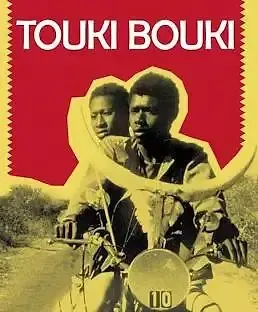
Mambéty began as a stage actor. After studying drama, he joined the Théâtre National Daniel Sorano in Dakar, performing in local and classical works, before being expelled for disciplinary reasons. This experience pushed him toward cinema. Entirely self-taught as a filmmaker (he had no formal training), he made his first short films with limited resources, including equipment support from the French Cultural Center in Dakar. His early shorts include Contras’ City (City of Contrasts, 1968/1969), a satirical look at the architectural and cultural contrasts of postcolonial Dakar, and Badou Boy (1970), a comic portrait of a street-smart young outsider pursued by an absurd policeman; the latter won the Silver Tanit at the Carthage Film Festival. His breakthrough and most celebrated work is the feature Touki Bouki (Journey of the Hyena, 1973). Made on a modest budget, it follows two young lovers, Mory and Anta, who dream of escaping Dakar for a romanticized Paris. The film is renowned for its energetic, non-linear editing, bold sound design, hybrid imagery (traditional and modern, African and Western), and poetic critique of postcolonial desire and alienation. It won the International Critics’ Prize at Cannes and a Special Jury Award at the Moscow Film Festival, and is widely regarded as a landmark of African and world cinema. Nearly twenty years later he returned with Hyènes (Hyenas, 1992), an adaptation of Friedrich Dürrenmatt’s play The Visit, set in his native Colobane. It continues themes of power, greed, materialism, and the moral costs of neocolonial consumerism. He also directed the short Parlons Grand-mère (1989). At the time of his death he was working on a trilogy of shorts titled Contes des Petites Gens (Tales of the Little People / Tales of Ordinary People). The first, Le Franc (1994), is a comic allegory about the devaluation of the CFA franc; the second, La Petite Vendeuse de Soleil (The Little Girl Who Sold the Sun, 1999), was completed and released posthumously and celebrates the resilience of a young disabled street girl selling newspapers. His brother Wasis Diop contributed music to several of his films. Mambéty’s style is experimental and poetic rather than strictly realist or didactic. He mixed griot storytelling traditions with avant-garde techniques, jump cuts, colliding montage, and rich soundscapes to explore hybridity, marginality, power, and the dreams of ordinary people in postcolonial Africa. He rejected pure nationalism or colonial imitation, seeking instead a reinvented African film language.
PERSONAL LIFE
Mambéty was the older brother of the well-known Senegalese musician and composer Wasis Diop. He was the uncle of filmmaker and actress Mati Diop (daughter of Wasis Diop). He was also the father of Teemour Diop Mambety. He remained closely tied to Colobane and Dakar throughout his life, frequently returning to the neighborhood and its people as both subject and inspiration. He traveled in Europe but never settled there permanently for training or career, preferring to work from Senegal. He died of lung cancer on 23 July 1998 in a Paris hospital while still actively working on films.
Despite a relatively small body of work, Djibril Diop Mambéty is considered one of the most original and influential figures in African cinema. His films continue to be restored, screened, and studied internationally. He is remembered as a visionary who elevated the lives of “little people,” challenged conventional narrative forms, and left a lasting poetic and critical legacy.
Filmography
Career Timeline
By Decade
Box Office Trend
Sep 11 – Sep 17, 2026- 1
 One Gidi NightNew this week₦17,523,920.0075 cinemas
 - 2
 ₦15,948,949.0037 cinemas
 - 3
 ₦11,144,825.0052 cinemas
 - 4
 ₦10,840,075.0037 cinemas
Subscribe to our Newsletter
Get the latest box office updates, trending movies, and exclusive reviews delivered straight to your inbox.
Popularity Score
Top 100% of African actors