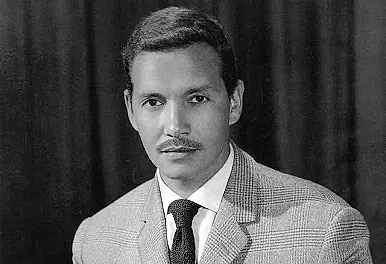
Shadi Abdel Salam
- Born
- 1930-03-15 (age 56)
- Died
- 1986-10-08 (aged 56) · 39 years ago
- Birthplace
- Alexandria, Egypt
- Occupation
- Film Director, Screenwriter, Costume And Set Designer, Architect, Historical Consultant, Educator
- Alma Mater
- Victoria College, Alexandria; Faculty of Fine Arts, Cairo
- AKA
- Shady Abd El Salam, Chadi Abdel Salam, Chadi Abdessalam
Career Stats
Career Overview
Shadi Abdel Salam has 1 film credits since 1969 .
- Peak: 1969
Role Distribution
Genre Breakdown
Biography
EARLY LIFE
Shadi Abdel Salam was born on 15 March 1930 in Alexandria, Egypt, into a family with roots in both the cosmopolitan coastal city and Upper Egypt (Minya). His father was a lawyer. He received a privileged education at the prestigious Victoria College in Alexandria, graduating in 1948. He then spent time in England studying theatre arts, drama, philosophy and law (1949–1950), later returning for additional drama studies. Back in Egypt he enrolled at the Faculty of Fine Arts in Cairo, graduating in architecture in 1955 under the mentorship of Hassan Fathy, whose emphasis on traditional Egyptian materials, heritage and design deeply shaped Abdel Salam’s aesthetic and cultural outlook.
CAREER
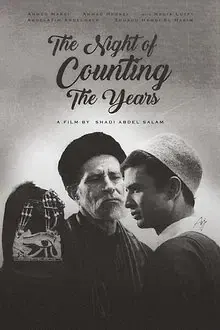
Abdel Salam began his professional life as a set and costume designer in the late 1950s. He worked as assistant to the artistic architect Ramsis W. Wassef and quickly became one of Egyptian cinema’s most respected designers of historical productions. Key credits as designer or art director include: Wa Islamah (Oh Islam!, 1961) Al-Nasser Salah Ad-Din (Saladin the Victorious, 1963, directed by Youssef Chahine) Almaz wa Abdu El Hamouly Maw’ed fi al-Burj and others. He also served as historical consultant and supervisor of décor, costumes and accessories for the Polish film Pharaoh (1966, directed by Jerzy Kawalerowicz). In 1969 he directed his sole narrative feature, Al-Mummia (The Night of Counting the Years / The Mummy). Inspired by the 1881 discovery of the Royal Cache at Deir el-Bahari, the film explores themes of cultural identity, historical memory, tomb-robbing and the ethics of heritage. Shot largely in classical Arabic (Fus’ha) — unusual for Egyptian commercial cinema at the time — it is celebrated for its austere, poetic style, rigorous historical research and philosophical depth. It won major awards (including the FIPRESCI Prize at Carthage) and is frequently cited among the greatest Egyptian and Arab films ever made. Martin Scorsese’s World Cinema Project restored the film in 2009, further elevating its international reputation; Scorsese praised it as “an astonishing piece of cinema.” The same year he directed the short The Eloquent Peasant (adapted from the ancient Egyptian literary text). Throughout the 1970s and 1980s he focused on documentaries and educational/historical films about Egyptian culture and antiquity, including Horizons (Afaq, 1972), Armies of the Sun (Goyoush el-Shams, 1974 — documenting the spirit of Egyptian soldiers after the October 1973 War), Tutankhamun’s Chair, The Pyramids and Before Them, and Ramses II. He served as Director of the Ministry of Culture’s Center for Experimental Films (from around 1970) and taught décor, costumes and film direction at Egypt’s Higher Institute of Cinema (1963–1969). For more than a decade (roughly 1974–1985) he prepared an ambitious epic on the reign of the pharaoh Akhenaten (The Tragedy of the Great House / Ikhnatoun / Akhenaten), completing extensive research, multiple script drafts, and detailed costume and set designs. He insisted the film be financed entirely by Egyptian sources and rejected foreign funding offers; the project remained unfinished at his death. Material from it later contributed to posthumous presentations and related works.
Abdel Salam’s lifelong project was the recovery and reactivation of Egypt’s ancient cultural memory as a source of national and human identity. His work combines architectural precision, painterly composition, rigorous historical research and a meditative cinematic style that privileges image, silence and ritual over conventional dialogue. A permanent exhibition and archive devoted to his drawings, designs, manuscripts and films exists at the Bibliotheca Alexandrina in Alexandria. On 15 March 2015 Google celebrated his 85th birthday with a Google Doodle. He is often portrayed as living a somewhat monastic, research-driven existence focused on his artistic and historical projects. He died in Cairo on 8 October 1986 and was buried in the Cairo Necropolis.
Filmography
Career Timeline
By Decade
Box Office Trend
Sep 18 – Sep 24, 2026- 1
 One Gidi Night▼ -35%₦11,318,134.0086 cinemas
 - 2
 ₦9,780,795.0049 cinemas
 - 3
 ₦6,353,320.0044 cinemas
Subscribe to our Newsletter
Get the latest box office updates, trending movies, and exclusive reviews delivered straight to your inbox.
Popularity Score
Top 100% of African actors