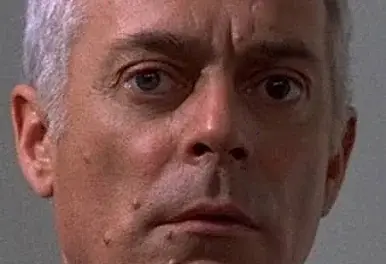
Jean Martin
- Born
- 1922-03-06 (age 86)
- Died
- 2009-02-02 (aged 86) · 17 years ago
- Birthplace
- Paris, France
- Occupation
- Actor
- AKA
- Jean Louis Martin
Career Stats
Career Overview
Jean Martin has 1 film credits since 1966 .
- Peak: 1966
Role Distribution
Genre Breakdown
Biography
EARLY LIFE
Jean Martin was born on 6 March 1922 in Paris into a family with roots in the Berry region of central France. He spent part of his childhood in Biarritz, where his father worked for a chic furrier. Tall and lean, he developed a distinctive physical presence that later served him well on stage and screen. At the outbreak of the Second World War he went into hiding to avoid forced labour in Germany. He later joined the French Resistance. After the war he also served with French paratroopers in Indochina. These experiences of resistance, military service, and later political engagement shaped his outlook and informed some of his most memorable roles.
CAREER
Martin first gained prominence in the French avant-garde theatre. In January 1953 he originated the role of Lucky in the world premiere of Samuel Beckett’s En attendant Godot (Waiting for Godot) at the small Théâtre de Babylone in Paris, directed by Roger Blin. His physically extreme, trembling, saliva-dripping performance (inspired in part by observing Parkinson’s patients) became legendary and remained associated with him for the rest of his life. In 1957 he originated the role of Clov opposite Blin’s Hamm in the French-language premiere of Beckett’s Fin de partie (Endgame), first performed at the Royal Court Theatre in London before transferring to Paris. He later performed Krapp’s Last Tape for Beckett, operating the tape recorder himself on stage. During the 1950s he worked at the Théâtre National Populaire and appeared in plays by Arthur Adamov and Eugène Ionesco, as well as in radio drama. His stage career brought him greater critical acclaim in France than most of his film work. On screen he appeared in more than eighty films and television productions between the mid-1940s and the late 1990s. Early credits included small parts in Cecile Is Dead (1944) and Jean Delannoy’s The Hunchback of Notre Dame (1956). He worked with directors such as Jacques Rivette (Paris Belongs to Us, The Nun), Alain Resnais (Je t’aime, je t’aime), Alain Robbe-Grillet, and Roberto Rossellini (The Messiah, as Pontius Pilate). His most internationally recognised film role came in 1966 as Colonel Mathieu, the cool, pragmatic, chain-smoking French paratroop commander in The Battle of Algiers. Pontecorvo specifically sought a little-known professional actor for the part; Martin was the only trained actor in a largely non-professional cast. His measured, almost bureaucratic delivery made the character’s defence of torture all the more unsettling. The film was long restricted or banned in France. Other notable international appearances include the gunslinger/mine owner Sullivan in Sergio Leone’s My Name Is Nobody (1973, opposite Terence Hill and Henry Fonda) and the laconic OAS adjutant Viktor Wolenski in Fred Zinnemann’s The Day of the Jackal (1973). He also provided the voice of the Bird (L’oiseau) in the animated classic Le Roi et l’oiseau (The King and the Mockingbird, 1980). Later credits included Lucie Aubrac (1997).
PERSONAL LIFE
Martin maintained a private personal life. He lived alone for many years in an apartment on the rue de Lille in the 7th arrondissement of Paris, remaining there in part because of his large collection of books. At the time of his death he was working on a book about Samuel Beckett. He died of cancer in Paris on 2 February 2009 and was cremated at Père-Lachaise before burial at Montparnasse Cemetery (division 6). He was an active left-wing political figure. In 1960 he was one of the signatories of the Manifesto of the 121, which called for recognition of the Algerian struggle for independence, denounced the use of torture by the French army, and supported conscientious objectors. As a result he was dismissed from the state-funded Théâtre National Populaire, blacklisted from radio and television work, and for a time found it difficult to secure employment in France (he accepted work in Helsinki during this period).
Jean Martin’s career bridged the post-war French avant-garde theatre and international cinema. He is remembered both as a pioneering Beckett interpreter and as the face of colonial military authority in one of the most influential political films ever made. His combination of physical intensity on stage, political commitment, and understated menace on screen left a lasting mark on French and world culture.
Filmography

Key Collaborations
Frequent Co-Stars

Frequent Directors
Frequent Producers
Career Timeline
By Decade
Box Office Trend
Sep 18 – Sep 24, 2026- 1
 One Gidi Night▼ -35%₦11,318,134.0086 cinemas
 - 2
 ₦9,780,795.0049 cinemas
 - 3
 ₦6,353,320.0044 cinemas
Subscribe to our Newsletter
Get the latest box office updates, trending movies, and exclusive reviews delivered straight to your inbox.
Popularity Score
Top 100% of African actors