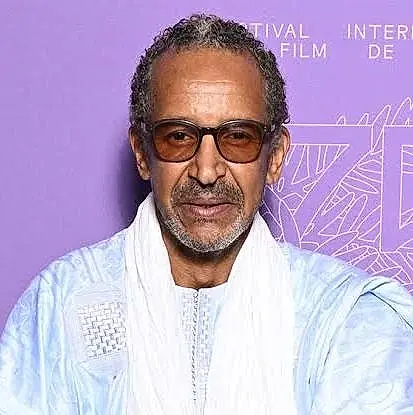
Abderrahmane Sissako
- Born
- 1961-10-13 (age 64)
- Birthplace
- Kiffa, Mauritania
- Occupation
- Film Director, Screenwriter, Producer, Former Cultural Advisor
- Spouse
- Maji-da Abdi
- Alma Mater
- Gerasimov Institute of Cinematography (VGIK), Moscow, Soviet Union / Russia
Career Stats
Role Distribution
Genre Breakdown
Biography
EARLY LIFE
Abderrahmane Sissako was born on 13 October 1961 in Kiffa, Mauritania. His father was Malian (from Sokolo), and the family moved to Mali when he was young. He spent much of his childhood and early education there. At around age 18 he returned to Mauritania to live with his mother. Inspired in part by family connections to cinema and a desire to engage with culture and literature, he obtained a scholarship and left for Moscow in 1983 to study filmmaking at the prestigious Gerasimov Institute of Cinematography (VGIK). He remained in the Soviet Union for about twelve years, making his first short films there.
CAREER
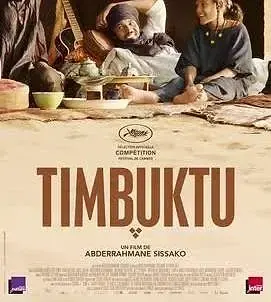
Sissako’s graduation short Le Jeu (The Game, 1989/1990) marked the start of his directing career. His early short Octobre (1993) screened in Un Certain Regard at Cannes. He gained wider attention with the feature La Vie sur terre (Life on Earth, 1998), followed by the critically acclaimed Waiting for Happiness (Heremakono, 2002), which competed in Un Certain Regard at Cannes, won the FIPRESCI Prize, and took the Grand Prize (Étalon de Yennenga) at FESPACO. His 2006 film Bamako (also known for its courtroom allegory set in a Malian courtyard) addressed issues of globalization, debt, and the relationship between Africa and the West; it screened Out of Competition at Cannes. His most celebrated work to date is Timbuktu (2014), a poetic and powerful drama about life under jihadist occupation in northern Mali. It competed for the Palme d’Or at Cannes (winning the Prize of the Ecumenical Jury and the François Chalais Prize), became Mauritania’s first Oscar nominee for Best Foreign Language Film, and swept the César Awards in France (including Best Film, Best Director, and Best Original Screenplay). Later works include contributions to collective projects and the feature Black Tea (2024), which premiered in competition at the Berlin International Film Festival. Sissako has also produced films by other African directors and served in festival juries (including at Cannes). He previously acted as a cultural advisor to former Mauritanian president Mohamed Ould Abdel Aziz.
PERSONAL LIFE
After completing his studies and early work in Moscow, Sissako settled in Paris in 1994. He is married to Ethiopian filmmaker Maji-da Abdi. His mother died on the final day of shooting Waiting for Happiness (Heremakono, 2002); the film is dedicated to her. He has spoken of cinema as a way of exploring personal and collective experiences of displacement, exile, and identity shaped by his movements between Mauritania, Mali, the Soviet Union, and France.
Sissako’s cinema is noted for its humanism, formal elegance, and engagement with themes of exile, migration, cultural identity, North-South power imbalances, and the everyday realities of African life. He is frequently ranked alongside major figures of African cinema such as Ousmane Sembène, Souleymane Cissé, Djibril Diop Mambéty, and Idrissa Ouédraogo as one of the few Sub-Saharan filmmakers to achieve sustained international recognition. He continues to work between Africa and Europe while mentoring and supporting younger filmmakers.
Filmography
Box Office Trend
Sep 11 – Sep 17, 2026- 1
 One Gidi NightNew this week₦17,523,920.0075 cinemas
 - 2
 ₦15,948,949.0037 cinemas
 - 3
 ₦11,144,825.0052 cinemas
 - 4
 ₦10,840,075.0037 cinemas
Subscribe to our Newsletter
Get the latest box office updates, trending movies, and exclusive reviews delivered straight to your inbox.
Popularity Score
Top 100% of African actors