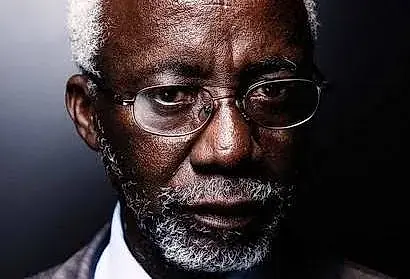
Souleymane Cissé
- Born
- 1940-04-21 (age 84)
- Died
- 2025-02-19 (aged 84) · 1 years ago
- Birthplace
- Bamako, French Sudan
- Occupation
- Film Director, Screenwriter, Producer, Cameraman
- Spouse
- Dounamba Dany Coulibaly
- Alma Mater
- Gerasimov Institute of Cinematography (VGIK), Moscow
- AKA
- Solomani Sisé
Career Stats
Career Overview
Souleymane Cissé has 1 film credits since 1987 .
- Peak: 1987
Role Distribution
Genre Breakdown
Biography
EARLY LIFE
Souleymane Cissé was born on 21 April 1940 in Bamako into a modest Muslim family. He developed a passion for cinema from a young age, regularly attending screenings (including at the Vox cinema) from around the age of six or seven with his older brothers and their friends. He attended secondary school in Dakar, Senegal, and returned to Mali in 1960 following the country’s independence and the dissolution of the Mali Federation. His desire to become a filmmaker was sparked while working as an assistant projectionist when he saw a documentary about the arrest of Congolese leader Patrice Lumumba. He later obtained a scholarship to study at the prestigious Gerasimov Institute of Cinematography (VGIK) in Moscow, where he trained from the mid-1960s and graduated in 1969. His younger brother is the film director Alioune Ifra Ndiaye.
CAREER
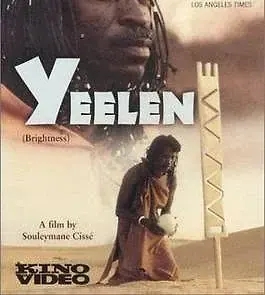
After returning to Mali in 1970, Cissé joined the Ministry of Information as a cameraman, producing documentaries and short films while traveling extensively across the country. Early works include shorts such as L’Aspirant (1968), Source d’inspiration (1968), Dégal à Dialloubé (1970), Fête du Sanké (1971), and the medium-length Cinq jours d’une vie (Five Days in a Life, 1972). His first feature, Den Muso (The Young Girl / The Girl, 1975), shot in Bambara, told the story of a mute young woman who is raped, becomes pregnant, and faces rejection. The film was banned by Malian authorities; Cissé was arrested and briefly jailed on charges related to accepting French funding. While imprisoned he wrote the script for Baara (Work, 1978), a critique of labor conditions and corruption that won the Étalon de Yennenga (grand prize) at FESPACO. Finyé (The Wind, 1982) explored youth rebellion against authority and also won major prizes, including the Étalon de Yennenga. His masterpiece Yeelen (Brightness / Light, 1987), a visually poetic coming-of-age story drawing on Bambara cosmology and oral traditions, won the Jury Prize at the 1987 Cannes Film Festival—the first sub-Saharan African film to receive a major award there. He has described it partly as a response to external ethnographic representations of Africa. Later features include Waati (Time, 1995), which competed for the Palme d’Or at Cannes and addressed themes including apartheid and identity; Tell Me Who You Are (2009); O Sembene! (2013, a tribute); and O Ka (Our House, 2015), a personal work inspired by family experiences with inheritance and polygamy. Cissé served as president of UCECAO (Union of Creators and Entrepreneurs of Cinema and Audiovisual Arts of Western Africa) and was involved with Martin Scorsese’s World Cinema Foundation. In 2023 he received the Carrosse d’Or (Golden Coach) at Cannes in recognition of his bold and uncompromising body of work. The award was briefly reported stolen from his Bamako home in 2024 before being recovered. His films are noted for social realism, complex storytelling, critiques of power, patriarchy, military violence, and the recovery of African tradition and spirituality. He is frequently ranked among the greatest African filmmakers of the 20th and early 21st centuries.
PERSONAL LIFE
Cissé was married to Dounamba Dany Coulibaly. He had several children, including daughters Mariam Cissé (who publicly announced his death) and Fatou Cissé (a filmmaker who directed a documentary homage to her father). He remained deeply connected to Mali throughout his life and was known for his commitment to African cultural independence and the development of local cinema infrastructure. In his later years he continued advocating for African filmmakers, criticizing dependence on European funding and calling for better distribution and cinema construction in Mali. On the morning of the day he died, he held a press conference urging authorities to support the industry. He had been scheduled to chair the feature film jury at FESPACO in Ouagadougou shortly afterward.
Cissé is remembered as a foundational figure who helped establish a distinct African cinematic language independent of colonial frameworks. Tributes following his death described him as a “monument of African cinema,” a humanist, and a politically engaged artist. His work continues to be restored, screened, and studied internationally.
Filmography
Career Timeline
By Decade
Box Office Trend
Sep 11 – Sep 17, 2026- 1
 One Gidi NightNew this week₦17,523,920.0075 cinemas
 - 2
 ₦15,948,949.0037 cinemas
 - 3
 ₦11,144,825.0052 cinemas
 - 4
 ₦10,840,075.0037 cinemas
Subscribe to our Newsletter
Get the latest box office updates, trending movies, and exclusive reviews delivered straight to your inbox.
Popularity Score
Top 100% of African actors