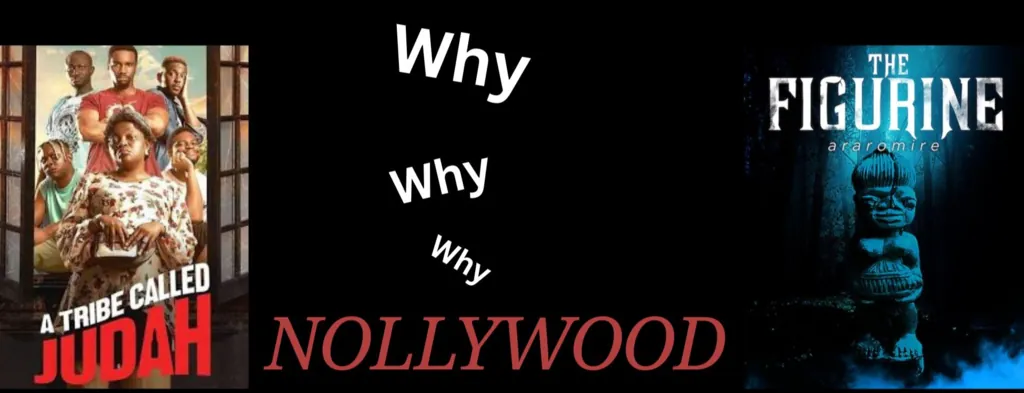
Just last December, I found myself sitting in a packed Silverbird cinema in Lagos for one of the year’s most highly anticipated holiday releases. The crowd erupted in cheers when a popular skit-maker made a surprise cameo. The production design was lush, the cinematography was crisp, and the soundtrack was thumping. But by minute 45, I realized something frustrating: the plot had completely derailed, the dialogue felt like a first draft, and the emotional stakes had vanished.
I looked around, and I could see other viewers checking their phones. We were watching a movie with a massive budget, yet it felt fundamentally broken.
If you’ve ever sat down to watch the latest Nollywood blockbuster, only to find yourself rolling your eyes at the plot holes, you aren't alone. There’s a running joke among Nigerian audiences and international viewers alike: we love our local movies, but why do they sometimes feel so... bad?
It’s a harsh question, but a fair one. Today, the Nigerian film industry is an absolute global juggernaut. Yet, for every critically acclaimed masterpiece that sweeps international film festivals, there are dozens of poorly paced, badly scripted movies flooding YouTube and streaming platforms.
So, what’s really going on? Is it a lack of talent? Lazy writing? Or is there a deeper structural issue within African cinema? Let’s dive into the real reasons why Nollywood movies struggle with consistency in the streaming era—and what it will take to fix them.
The Paradox: The "Billion-Naira" Era vs. The Quality Plateau
Before we critique the art, we have to respect the business. Nollywood is undeniably a global powerhouse. We have officially entered the era of the Billion-Naira Box Office, kickstarted by Funke Akindele’s historic A Tribe Called Judah and sustained by recent holiday blockbusters through 2025 and 2026.
Furthermore, despite recent contractions in global streaming budgets (like Amazon Prime Video's strategic pullback from acquiring some local originals in late 2024), platforms like Netflix, Showmax, and YouTube continue to pump capital into the industry. Financially, Nollywood is a multi-billion-naira ecosystem that employs hundreds of thousands of Nigerians.
But artistically? It often feels like we’ve hit a plateau. The core issue isn't a lack of passion, high-end cameras, or beautiful locations; it’s a lack of narrative coherence. Let's be clear: Nollywood is not entirely "bad." Recent triumphs like CJ Obasi’s visually stunning Mami Wata or Editi Effiong’s global hit The Black Book prove we have world-class talent. But the average output suffers from recurring structural problems.
4 Key Reasons Why Some Nollywood Movies Miss the Mark
1. The Screenplay is an Afterthought
Every great movie starts with a great script. Unfortunately, in the rush to feed the insatiable algorithms of streaming platforms and YouTube, screenwriting in Nollywood is often severely underdeveloped. Many scripts are written over a single weekend rather than taking months of story development, drafting, and collaboration. When the foundation of the story is weak, even the best actors and RED cameras can’t save the film. As acclaimed director Alfonso Cuarón once noted, you cannot compensate for a lack of soul in a script with just good visuals.
2. The "Skit-Maker to Actor" Pipeline
Let’s talk about casting. It’s no secret that many producers cast popular influencers, TikTok comedians, and musicians based on their follower count rather than their acting chops. While bankable stars bring in initial social media hype, throwing untrained internet personalities into dramatic lead roles breaks the audience's immersion. A movie cannot survive on celebrity cameos alone if the characters feel hollow and the delivery sounds forced.
Iretiola Doyle (@IretiolaDoyle), a prominent Nollywood veteran actress, writer, and producer, posted this in May 2022 (quoting a related comment about “influencer actors”):
Perhaps if casting is based on talent and the hunger to succeed as opposed to social media numbers and who is willing to push YOUR film aggressively (at no added cost) producers wouldn't have this particular problem.
3. The "People Need to Eat" Hustle Culture
Because filmmaking in Nigeria is incredibly capital-intensive and piracy remains a threat, many producers operate with a "quick turnaround" mindset. They shoot fast, edit fast, and release fast just to recoup costs before the next holiday season. While understandable from a survival standpoint, this assembly-line approach kills creativity. Filmmakers are often so exhausted by the logistics of making the movie (securing locations, dealing with power outages, managing large crews) that they have no energy left to refine the art of the movie.
4. A Lack of Formal Film Education and Criticism
Unlike Hollywood or South Korea, Nigeria doesn't yet have a deeply ingrained, institutionalized film culture tied to rigorous academic training. Many of our best directors are brilliant autodidacts (self-taught). While their hustle is commendable, operating without a solid foundation in the language of cinema—understanding pacing, visual storytelling, and structure—leads to generic filmmaking. Furthermore, a lack of robust, constructive Nigerian film criticism means creators aren't always held accountable for artistic shortcomings by the press.
The "Forks and Knives" Surgery: A Brief History
To understand Nollywood's current struggles, you have to look at its history. The industry didn't have the luxury of a century of studio development. It evolved from colonial-era propaganda films to the theater-transitioned celluloid era of the 1970s, before the oil boom crashed local cinema culture.
This led to the explosive 1992 release of Living in Bondage, which birthed the "home video" era. Filmmakers were literally shooting on the streets of Surulere with whatever they had. As one industry insider famously put it, making a Nollywood movie is like "performing open-heart surgery with forks and knives." The genius is that the patient usually survives.
But here’s the catch: an industry cannot thrive forever on survival tactics. Relying on hustle rather than proper tools (scalpels, if you will) is what results in the messy, inconsistent movies we see today.
How Nollywood Can Fix Its Quality Crisis in 2026 and Beyond
So, how does the Nollywood film industry move past this plateau and secure its future?
- Embrace Mid-Budget, Localized Storytelling: We don't need to out-glitz Hollywood with massive CGI budgets. Look at the Taiwanese New Wave or the South Korean film industry—they gained global dominance by telling hyper-local, socially realistic stories with immense heart. Nollywood should focus on the specificity of the Nigerian condition rather than generic, borrowed tropes.
- Invest in Story Development: Pay writers properly and give them the time to craft compelling, logically sound narratives before a single camera rolls.
- Prioritize the Craft Over the Clout: Directors and executive producers must take back the reins from marketers, ensuring that acting roles go to those who can actually perform them.
- Build a Cinematic Education Infrastructure: We need more accessible, high-quality film schools and a vibrant culture of film analysis that bridges the gap between academia, critics, and mainstream filmmakers.
Frequently Asked Questions (FAQs)
Why are Nollywood movies often criticized for bad acting?
The perception of "bad acting" in modern Nollywood often stems from stunt casting, where directors choose influencers or musicians based on their social media popularity rather than their training. Additionally, poor directing and underdeveloped scripts leave even veteran actors with unnatural dialogue to perform.
Is Nollywood the biggest film industry in the world?
By volume and number of movies produced annually, Nollywood is the second-largest film industry in the world, behind India's Bollywood, and ahead of Hollywood. It produces over 2,500 films a year. However, in terms of global box office revenue, Hollywood still leads.
What is the biggest problem in the Nollywood film industry today?
The biggest problem in Nollywood is a lack of structural coherence, driven by rushed screenwriting, inadequate formal film education, and a prioritization of quick financial returns (especially for holiday cinema releases) over artistic development.
How can Nollywood movies get better?
Nollywood can improve by investing more time and money into script development, establishing formal film education programs, prioritizing trained actors over influencers, and focusing on mid-budget, culturally specific stories rather than trying to mimic Hollywood blockbusters.